



SnapFab
HomeAbout usOur Process
Upload Files for Quote
Sign In
Sf RESPONSIVE. ENGAGED. HANDS-ON.

Hardware has a new launch pad.

Responsive engineering support from application questions through development builds and repeat production.

We work alongside your team to understand what the part needs to do, resolve practical manufacturing questions, and keep the build moving as requirements evolve.

Start a quote ↗
ISO 9001Quality management
ISO Class 8Class 100,000 cleanroom
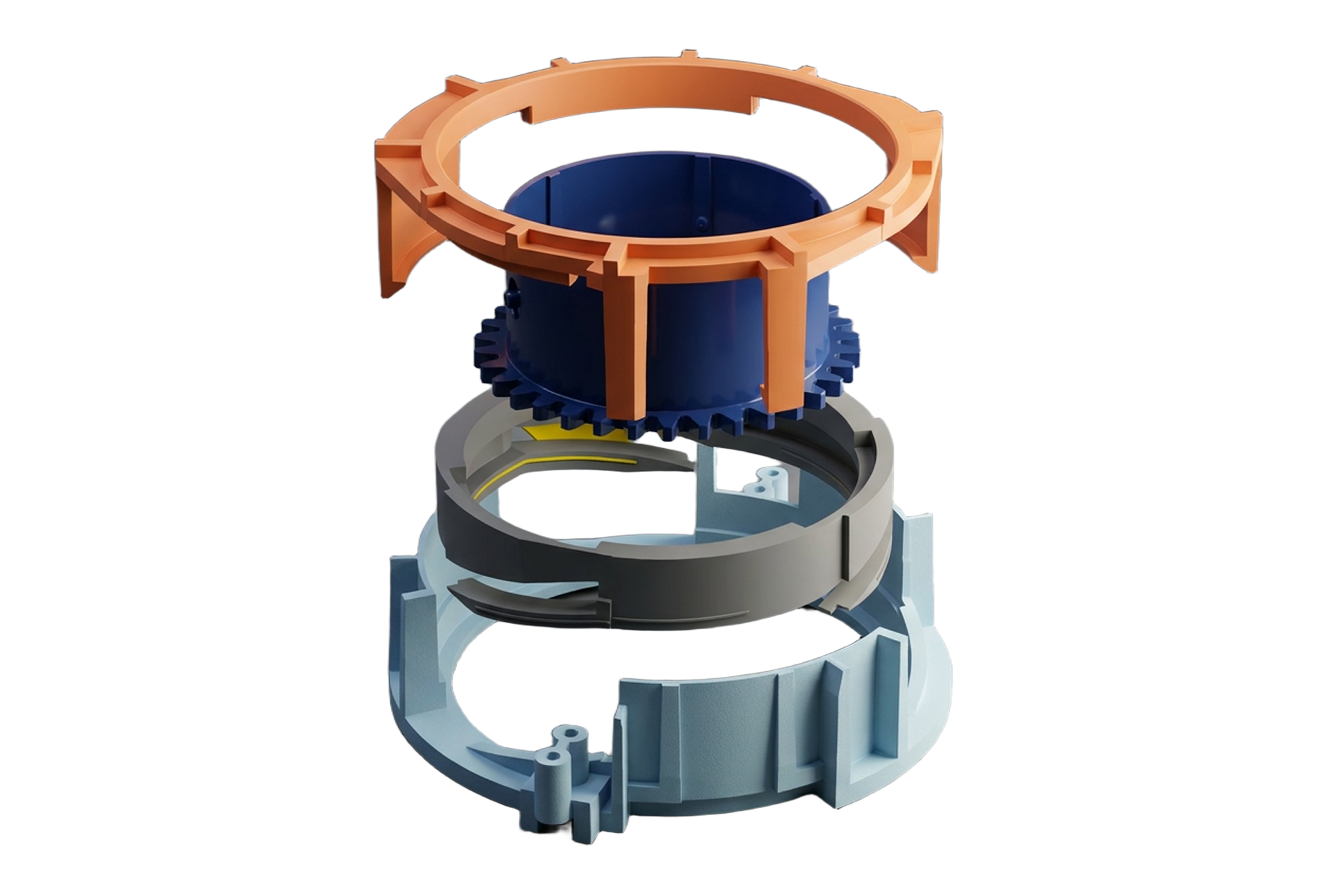
Exploded assembly showing Snapfab tooling options. Callouts: Family bridge tool, 12 days; Snapframe prototype tool, 6 days; Insert overmold Snapframe prototype tool, 8 days.Snapfab tooling build calloutsFamily bridgetool12 daysSnapframeprototype tool6 daysInsert overmoldSnapframeprototype tool8 days
  • Family bridge tool12 days
  • Snapframe prototype tool6 days
  • Insert overmold Snapframe prototype tool8 days

IN OUR CUSTOMERS’ WORDS

INJECTION MOLDING / PRODUCT DEVELOPMENT
“
Snapfab completely changed how we prototype injection molded parts. Instead of waiting weeks or getting stuck in tooling approvals, we were able to test real molded parts early in development and validate fit, function, and assembly, which wasn’t practical with 3D printing alone.
Brian KuhlBrian KuhlStaff Product Design Engineer
Also.
Published on Snapfab.com ↗

Verbatim customer feedback about injection-molding development. Experiences are specific to each program.

01 CORE MANUFACTURING CAPABILITIES

The capabilities you need.
Working together.

Explore our core manufacturing capabilities, backed by a broader range of processes, finishing, and assembly support. We help match the approach to your product, not the other way around.

01THERMOPLASTICS · TOOLINGInjection molding↗

For repeatable plastic parts when material, wall thickness, finish, and production intent need to be tested together.

Functional, structural, and cosmetic plastic parts, from thin-wall development and material trials to multi-cavity tooling and repeat builds.

Snapframe prototype tools · bridge tooling · production toolingExplore this capability ↗
02METAL + PLASTIC · PRECISIONCNC machining↗

For precise metal and plastic parts when critical dimensions, mating surfaces, material performance, and assembly fit matter.

Functional components and selective finishing, from early geometry checks to precision features supporting development builds and repeat manufacturing.

Metal and plastic components · critical interfaces · selective finishingExplore this capability ↗
03ADDITIVE · DEVELOPMENT BUILDS3D printing↗

For early physical parts when geometry, handling, access, and assembly layout need evaluation before selecting production manufacturing.

Concept models and development components, from form and packaging reviews to geometry checks guiding revisions and process selection.

Concept models · geometry evaluation · development and assembly checksExplore this capability ↗
04CAST PARTS · LOW-VOLUME BUILDSUrethane casting↗

For lower-volume cast parts when appearance, handling, material behavior, and component fit need evaluation beyond printed models.

Cast components for evaluation and lower-volume builds, from assessments and fit checks to application-specific material and manufacturing discussions.

Development components · appearance and fit · lower-volume cast buildsExplore this capability ↗
05SHEET COMPONENTSSheet metal fabrication↗

For fabricated sheet components when enclosure layout, structural requirements, mounting features, and assembly interfaces guide manufacturing decisions.

Sheet-based parts for hardware programs, from packaging reviews to fabrication planning around material, geometry, finish, and assembly requirements.

Sheet components · mounting and interfaces · fabrication and finishingExplore this capability ↗
06MOLDING · APPLICATION-DEPENDENTCompression molding↗

For molded components when material behavior, part geometry, application requirements, and tooling investment suggest an alternative approach.

Application-led molding support, from reviewing part requirements to evaluating materials, tooling configuration, manufacturing suitability, and planning subsequent builds.

Application-led material review · tooling configuration · molding route selectionExplore this capability ↗

Capabilities describe documented project experience; requirements, configuration, and accepted outcomes are specific to each build.

02 SUPPORTING PROCESSES + ASSEMBLY

Parts have to work together.

Secondary operations support the primary route, connect components, and help turn individual parts into functional assemblies.

Explore secondary processes ↗
01

Overmolding + insert integration

Combine compatible materials or embed inserts; confirm substrate, insert geometry, and molding sequence for the part.

+
02

Ultrasonic welding

Join compatible thermoplastic parts; joint geometry and material affect whether the method fits.

+
03

Secondary machining + rework

Add or refine holes, fits, and mating surfaces after molding when the design calls for it.

+
04

Painting + cosmetic finishing

Evaluate coating, appearance, and final fit together; finish selection is application-specific.

+
05

Assembly development + fit

Check connected components, interfaces, and assembly sequence, not just an isolated part.

+
03 TOOLING WITHIN INJECTION MOLDING

Choose for the build.
Not a forced next step.

Snapframe prototype tools, bridge, and production tooling are options when injection molding fits the requirement. Ranges overlap by design.

ALL OPTIONS USE P20 STEELYOU OWN THE TOOL · SNAPFAB MAINTAINS IT
01 / INJECTION MOLDING

Snapframe prototype tools

Development, fit/function testing, iteration, and appropriate low-volume production.

Tooling cost
$1,000–$10,000
Lead time
As fast as 5 days
Program fit
Ideal program fit: 0–5,000 parts
TRADEOFF TO DISCUSS

Simplified gates, cooling, and actions; resin and dimensional requirements matter. Shorter life and higher per-part costs may not fit sustained production.

02 / INJECTION MOLDING

Bridge tooling

Production-representative parts, validation, pilot builds, and early production.

Tooling cost
$5,000–$30,000
Lead time
As fast as 2–3 weeks
Program fit
Ideal program fit: 100–25,000 parts
TRADEOFF TO DISCUSS

Typically single-cavity and not hardened; multi-cavity configurations are available depending on requirements. Shorter life and higher per-part cost than production tools.

03 / INJECTION MOLDING

Production tooling

Finalized designs and sustained high-volume manufacturing - Export & transfer tooling available for domestic production.

Tooling cost
$10,000–$100,000+
Lead time
Typically 4–8 weeks
Program fit
Production-tool life: 250,000+ shots
TRADEOFF TO DISCUSS

Higher tooling commitment; design changes take more time and cost more. Shots are cycles, not a guaranteed number of accepted parts.

Ideal-volume ranges are planning guidance, not cutoffs or tool life. Prototype and bridge timing is “as fast as”; production is “typically.” A quote defines schedule, milestone, configuration, and terms. Amortization into low quantities may be available; it is not free tooling. Shot counts are molding cycles, not guaranteed accepted parts. Tool-life terms are confirmed per program.

04 PRODUCT DEVELOPMENT IN PRACTICE

Different products.
Different questions to solve.

Material behavior. Flow paths. Assembly fit. Explore the engineering decisions behind different hardware programs.

01Food assembly roboticsQUESTIONHow do you move CNC-machined robotic components into metal-detectable molded polymers while preserving functional mating surfaces and assembly fit?SNAPFAB WORKMaterial and molding development, selective post-mold CNC finishing, and physical assembly trials across a family of robotic components.See how the part family moved from CNC to molding ↗↗02Smart water dispensingQUESTIONHow do you coordinate structures, seals, fluid paths, and cosmetic housings across a multi-process development program?SNAPFAB WORK84 unique part names, including quotes and drafts, and approximately 75 engineering iterations across at least six manufacturing routes.Explore the connected development program ↗↗03Electric micromobilityQUESTIONHow do you balance molded texture, low-draft areas, threaded inserts, and a mating interface in a prototype housing?SNAPFAB WORKA requirements-led Snapframe prototype strategy made the texture and parting-line tradeoff clear before the customer approved the tooling direction.See the prototype tooling decisions ↗↗
05 START WITH WHAT THE PART NEEDS TO DO

What's your next build
trying to prove?

Share the part, assembly, and requirements. Explore the manufacturing route that fits your program.

Upload CAD for a quote ↗Talk through requirements ↗
SnapFab Logo


LOCATION:
San Francisco
California


CERTIFICATION:

ISO 9001


CONTACT:
support@snapfab.com

(415) 320-1403


ABOUT US

OUR PROCESS

RESOURCES

MATERIALS

TEXTURES

FAQS


© 2025 Snapfab. All rights reserved. Accessibility Privacy Policy